
A fashion journey from initial acquaintance to mutual benefit
Have you ever noticed small wrinkles along the seams of a hoodie or T-shirt? This problem is called seam puckering. It happens when the fabric around a stitched seam becomes wrinkled, gathered, or uneven. In clothing manufacturing, seam puckering can affect both the appearance and quality of finished garments.
Heavyweight streetwear, oversized T-shirts, and custom hoodies all need smooth and consistent stitching. Even expensive fabric can look poorly made when the seams are uneven.
Seam puckering may result from incorrect thread tension, unsuitable needles, fabric movement, or sewing techniques. Choosing the right materials and adjusting sewing conditions can help reduce this problem before bulk production.
Seam puckering happens when fabric wrinkles or gathers along a stitched seam. It can make custom clothing look less professional.
Incorrect thread tension, needle selection, and fabric feeding are common causes of seam puckering.
Heavyweight cotton, stretch fabrics, and lightweight materials may require different sewing adjustments.
Testing seam construction during sample development helps prevent expensive problems in bulk production.
Working with an experienced clothing manufacturer can help brands improve garment construction and maintain consistent product quality.
Seam puckering refers to unwanted wrinkles, folds, or distortion along the stitching lines of a garment.
You may notice it around the shoulders, side seams, sleeves, hems, or other sewn areas.
The fabric should normally lie smoothly around the seam according to the intended garment design. When puckering occurs, the stitched area may appear tighter or more gathered than the surrounding fabric.
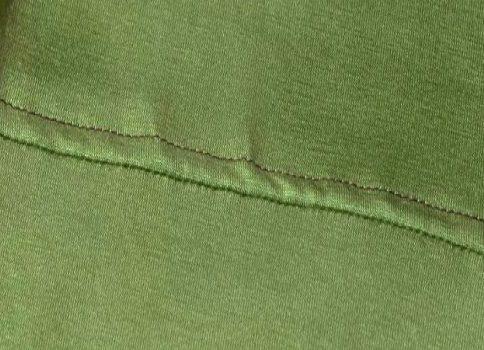
Here are some problems you might notice:
Small wrinkles running along a seam
Uneven fabric around the stitching
Tight or gathered seam lines
Wavy hems on T-shirts
Distorted shoulder or sleeve seams
Wrinkles that become more noticeable after washing
Not every wrinkle indicates a manufacturing defect. Some garment styles intentionally use gathering, elastic construction, or decorative stitching.
The important difference is whether the finished seam matches the approved design and quality requirements.
Tip: When checking a clothing sample, place the garment on a flat surface and inspect the seams under good lighting. This makes unwanted wrinkles easier to identify.
Several factors can cause seam puckering during clothing production. Understanding the source helps manufacturers choose an appropriate solution.
Thread tension is one of the first things to investigate when seams become puckered.
If the stitching tension is too high, the sewing thread may pull the fabric together and create wrinkles.
However, the correct adjustment depends on the machine, thread, fabric, and stitch construction.
Simply reducing tension without checking stitch balance may create other quality problems.
Different fabrics require different needle types and sizes.
A needle that is too large or unsuitable for the material may damage the fabric or increase distortion.
For knitted streetwear fabrics, appropriate ballpoint or stretch-compatible needles may be needed depending on the material construction.
A suitable needle helps the sewing machine form consistent stitches without unnecessarily damaging the fabric.
During sewing, the upper and lower fabric layers should move through the machine at compatible rates.
When one layer advances faster than the other, the material can stretch or gather.
This may create visible puckering, especially on long seams or fabrics that stretch easily.
The relationship between the sewing thread and fabric also matters.
Thread thickness, elasticity, shrinkage, and construction influence the finished seam.
For example, a thread that responds differently to washing than the garment fabric may contribute to seam distortion.
The manufacturer should evaluate the materials together rather than selecting thread based only on color.
Different types of puckering can look similar, but their causes are not always the same.
| Type | Main Cause | Possible Solution |
|---|---|---|
| Tension puckering | Excessive or unbalanced thread tension | Adjust thread tension and check stitch balance |
| Feed puckering | Unequal movement of fabric layers | Review feed settings and handling |
| Structural jamming | Too much thread crowded into the seam structure | Review needle, thread, stitch density, and seam construction |
| Shrinkage puckering | Different shrinkage behavior after washing | Test materials and finished seams before production |
Manufacturers may need to conduct more than one test to identify the actual cause.
Note: A sewing defect cannot always be corrected by changing one machine setting. Fabric properties, garment construction, and finishing processes should also be considered.
Not all fabrics behave the same way during sewing.
Streetwear brands often use heavyweight jersey, cotton fleece, French terry, and cotton-polyester blends. Each material has its own sewing characteristics.
Heavyweight cotton fabrics are popular for premium oversized T-shirts and structured streetwear garments.
The thicker material can create challenges when multiple fabric layers meet at a seam.
Needle size, thread thickness, machine settings, and seam construction should be selected for the actual material.
French terry is commonly used for sweatshirts, joggers, and lightweight hoodies.
Its knitted construction provides flexibility, but fabric stretching during sewing can affect seam appearance.
Controlling fabric movement and using suitable stitch settings may help maintain smooth seams.
Cotton fleece is widely used for custom hoodies and sweatpants.
Brushed surfaces, fabric thickness, and stretch characteristics may influence how the material travels through a sewing machine.
Different fleece constructions may require different adjustments.
Lightweight jersey fabrics can be more sensitive to stretching and feeding problems.
Incorrect handling may result in wavy hems or distorted seams.
| Fabric Type | Common Sewing Concern | What to Check |
|---|---|---|
| Heavyweight cotton jersey | Bulk at seams and stitch distortion | Needle, thread, seam construction |
| French terry | Stretching during sewing | Fabric feeding and stitch settings |
| Cotton fleece | Uneven feeding through thick layers | Presser foot pressure and feeding |
| Lightweight jersey | Wavy seams and stretched hems | Differential feed and fabric handling |
| Cotton-polyester blends | Different material behavior | Stitch balance and washing performance |
Tip: Always test your chosen fabric with the intended stitching method before approving a garment sample. A setting that works for one material may not work for another
.
Preventing seam puckering requires a combination of material selection, machine adjustments, sample testing, and quality inspection.
Start by selecting a needle suitable for the material and stitch type.
Check the needle condition regularly because damaged or worn needles can cause stitching problems.
Thread tension should be balanced so the seam forms correctly without pulling the fabric excessively.
Test the settings on the actual production fabric rather than relying on a standard machine setting.
Make sure the fabric layers move consistently through the sewing machine.
Depending on the machine, adjusting presser foot pressure or differential feeding may help reduce distortion.
Operators should avoid pulling or stretching the garment unnecessarily during sewing.
Choose thread based on the garment material, seam construction, strength requirements, and washing conditions.
The manufacturer should verify that the thread works properly with the intended needle and stitch type.
Sew a test seam using the actual fabric and construction details.
Inspect its appearance and evaluate the result after any relevant washing or finishing processes.
This helps identify problems before full production begins.
Very dense stitching may crowd the fabric and contribute to puckering in some materials.
The correct stitch density depends on the fabric, seam type, thread, and strength requirements.
Manufacturers should find a balance between seam appearance and performance.
Streetwear customers often pay attention to garment weight, fit, fabric texture, and finishing details.
A premium hoodie with uneven seams may not meet a customer's expectations, even when the fabric itself is good.
For clothing brands, seam quality can influence several areas.
Smooth, consistent seams help garments maintain the intended shape.
This is especially important for minimalist streetwear designs where stitching and construction details remain visible.
Customers may notice distorted hems, uneven side seams, or wrinkles around the shoulders.
Preventing avoidable sewing defects can support a better customer experience.
Consistent construction helps a clothing brand maintain its quality standards across different orders.
For growing brands, this becomes increasingly important when expanding product ranges or ordering larger quantities.
Identifying stitching problems during sampling may reduce the need for corrections, repairs, or rejected garments during bulk production.
Note: Good garment quality depends on more than fabric GSM or printing. Stitching, fit, finishing, and quality inspection all contribute to the finished product.
Clothing brands should review seam construction during the sample approval process.
Here are some practical checks.
Inspect the garment on a flat surface. Look for unwanted wrinkles around shoulders, sleeves, side seams, and hems.
Check the stitching. Look for skipped stitches, broken threads, uneven stitch formation, or visible distortion.
Compare both sides. Check whether matching garment sections have a consistent appearance.
Try on the sample. Inspect how the seams behave when the garment is worn and moved.
Test after washing. Follow a suitable agreed test procedure to identify any changes in seam appearance.
Review the sample with the manufacturer. Document issues and agree on corrections before bulk production.
A sample may look good immediately after sewing but behave differently after washing.
That is why evaluating the finished garment is important.
If you are developing your own streetwear collection, working with a manufacturer familiar with custom garment construction can help you identify potential production problems.
Before placing a bulk order, discuss your fabric selection, intended fit, seam construction, and quality expectations.
For heavyweight hoodies and oversized T-shirts, the manufacturer should review how the materials and sewing methods affect the finished design.
Hangzhou Aiqi Clothing Technology Co., Ltd. provides custom clothing manufacturing services for brands developing hoodies, T-shirts, sweatpants, and other apparel.
If you are planning a custom streetwear collection, you can contact Hangzhou Aiqi Clothing to discuss product specifications, fabric selection, sample development, and production requirements.
Sharing detailed design references and a tech pack can help the manufacturing team understand your expectations.
Incorrect thread tension and uneven fabric feeding are common causes. However, needle selection, thread properties, fabric structure, and washing can also contribute to the problem.
Some minor problems may improve with appropriate pressing or finishing, depending on the cause and fabric. However, more serious puckering may require adjusting the sewing process or resewing the seam.
Not necessarily. Heavyweight cotton may present different sewing challenges, but puckering depends on the fabric construction, machine settings, thread, and sewing technique.
Wavy hems often result from stretching or uneven fabric feeding during sewing. Knitted fabrics are particularly sensitive to handling and feed settings.
Yes. Different shrinkage behavior between the fabric, thread, and garment components may lead to puckering after washing.
Request a physical sample and inspect the stitching, shoulder seams, side seams, cuffs, and hems. Check the garment after washing when appropriate, and confirm that any required adjustments are completed before bulk production.
Seam puckering may look like a small sewing problem, but it can affect the appearance and perceived quality of custom clothing.
For streetwear brands, smooth seams are especially important when producing heavyweight T-shirts, oversized hoodies, and premium matching sets.
The key to preventing puckering is understanding fabric behavior, selecting suitable sewing materials, adjusting machine settings, and checking samples before bulk production.
If you are planning to manufacture custom streetwear, paying attention to stitching quality early can help you avoid preventable production problems.




 contact@aqii.group
 +86 13777583786
